
Outreach
Contact Us
Asghar Ghorbanpour
E-mail: aghorba@uwo.ca
The Western Mathematics Exposition Competition
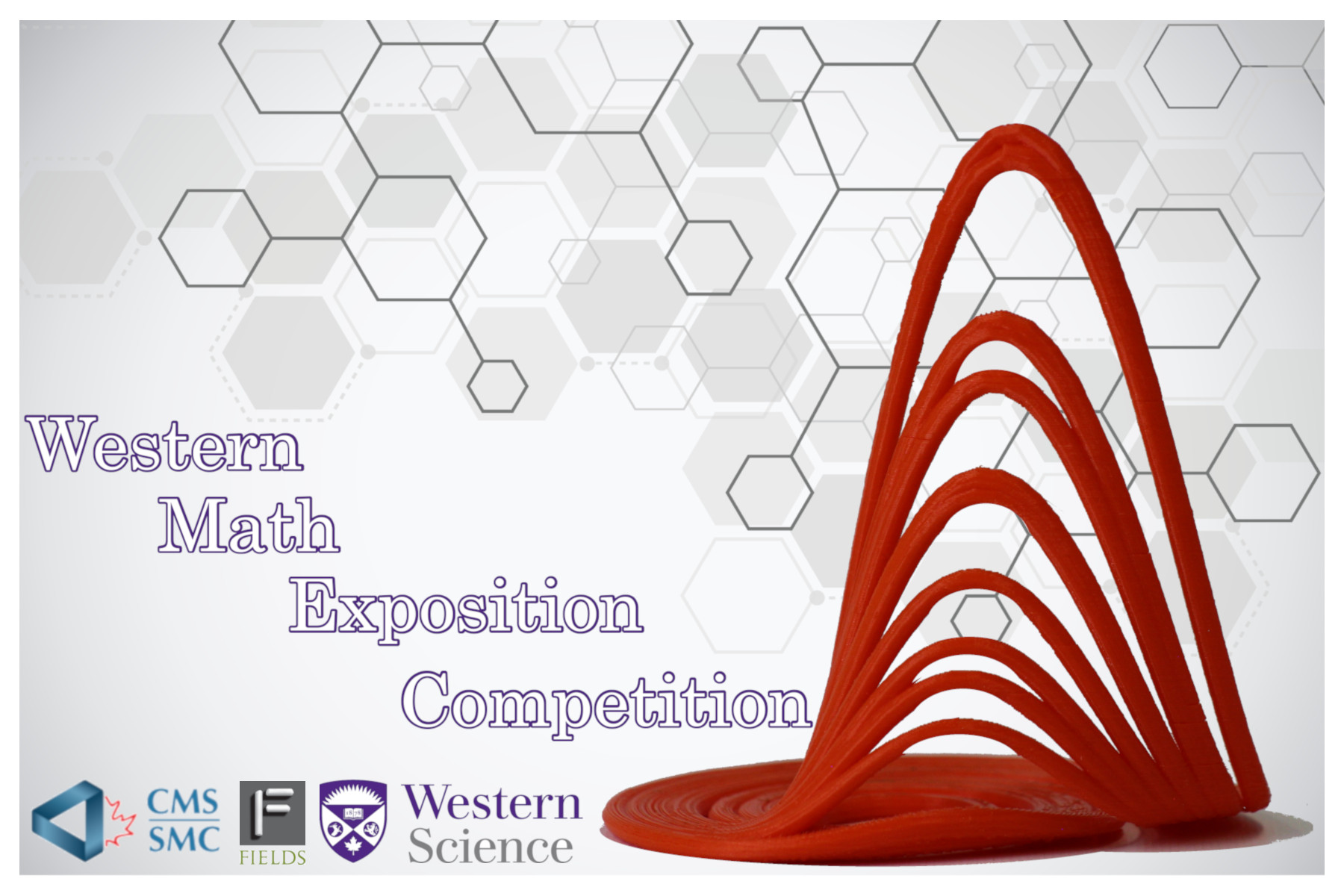
What the *trig* is this?!
Welcome to the Western Mathematics Exposition (WeMaEx).
This is not your typical math test. We challenge high school students to team up (groups of 2-3) to explore math topics that go beyond the textbook.
You pick a theme. You pick a format (Video, Poster, or Artifact). You compete for medals and cash prizes at Western University.
Top Awards:
The top winner teams in each category will receive a $1,000 prize.
All placing teams (1st, 2nd, and 3rd) will also receive official WeMaEx Medals.
The Formats
Choose the medium that fits your style.
Poster
Design a visually stunning poster explaining your mathematical concept.
- Goal: Visualize the data and the theory.
- Judging: Based on the official rubric.
Video
Produce an engaging video that breaks down complex ideas into something fun to watch.
- Goal: Teach and entertain.
- Judging: Based on the official rubric.
Artifact (Makers' Category)
Build a physical object or 3D model representing a mathematical concept.
- Goal: Make math tangible.
- Judging: Live judging on April 25th (Math Fair style) in the presence of judges, peers, and mentors.
Teams & Mentors
The Team
Groups of 2-3 High School Students (grade 9 - 12).
- Fee: $75 per team.
- Note: Financial support is available! Contact the coordinator (aghorba@uwo.ca) if you need funding.*
The Mentor
Every team needs a guide.
- Who can be a mentor? High school teachers, B.Ed candidates, or Senior Western Undergrads.
- The Job: Help pick a topic, manage time, and keep the team on track. You handle the official submission.
- Commitment: Approx. 7-10 hours total.
Registration
Find your team members and complete the registration. The registration fee for each team is $75. Financial support is available for those who need it—just contact the coordinator for more information.
Resources and Past Winners
Need inspiration? Check out how previous winners took home the gold.
Winners of 2026:
Winners of Poster Projects
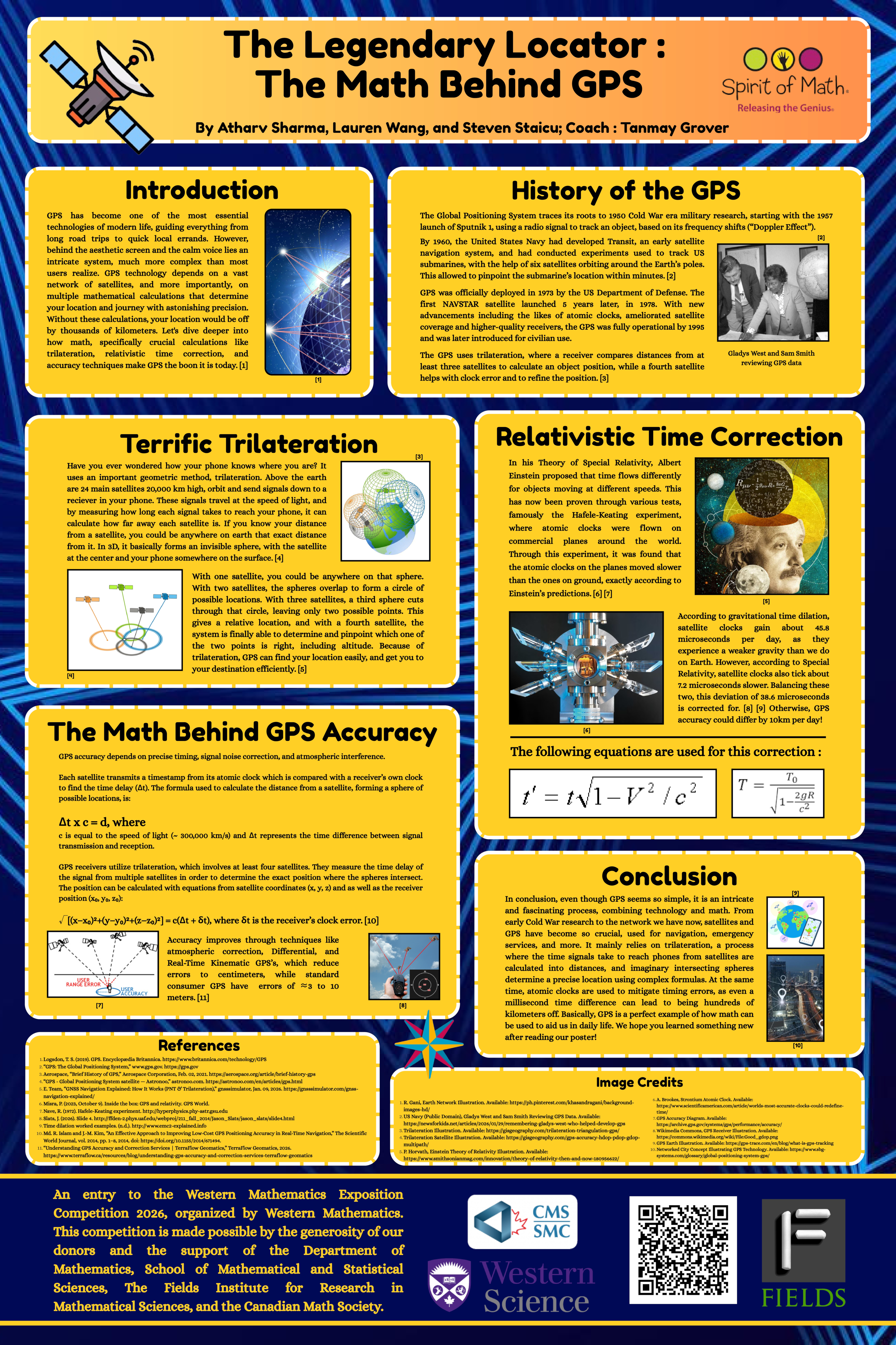
- Gold Medal Winning Poster:
- Title: The Legendary Locator: The math behid GPS
- School name: Sprit of Mathematics
- Mentor: Tanmay Grover
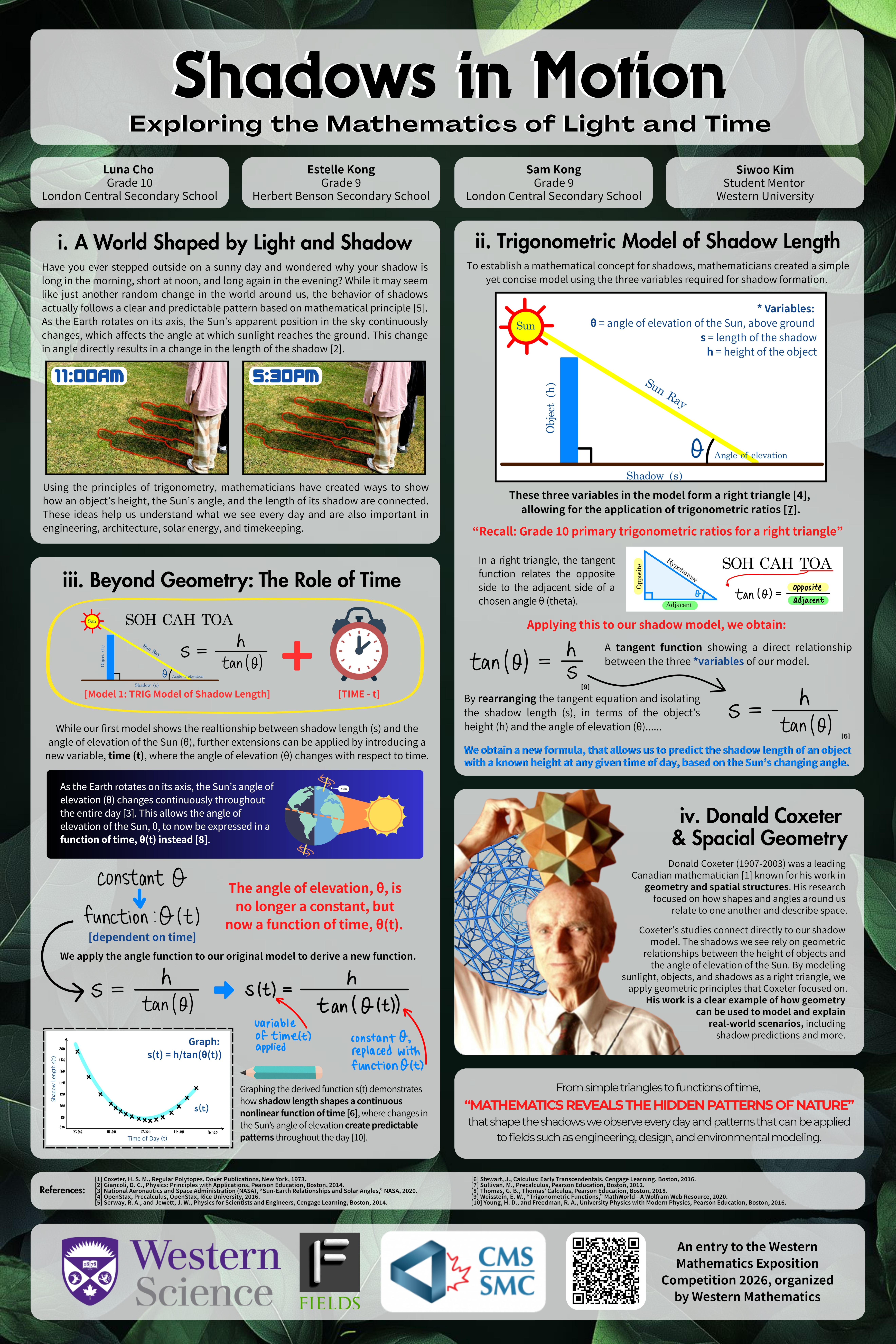
- Silver Medal Winning Poster:
- Title: Shadows in Motion: Exploring the mathematics of light and time
- School Name: London Central and H.B. Beal Secondary School
- Mentor: Siwoo Kim
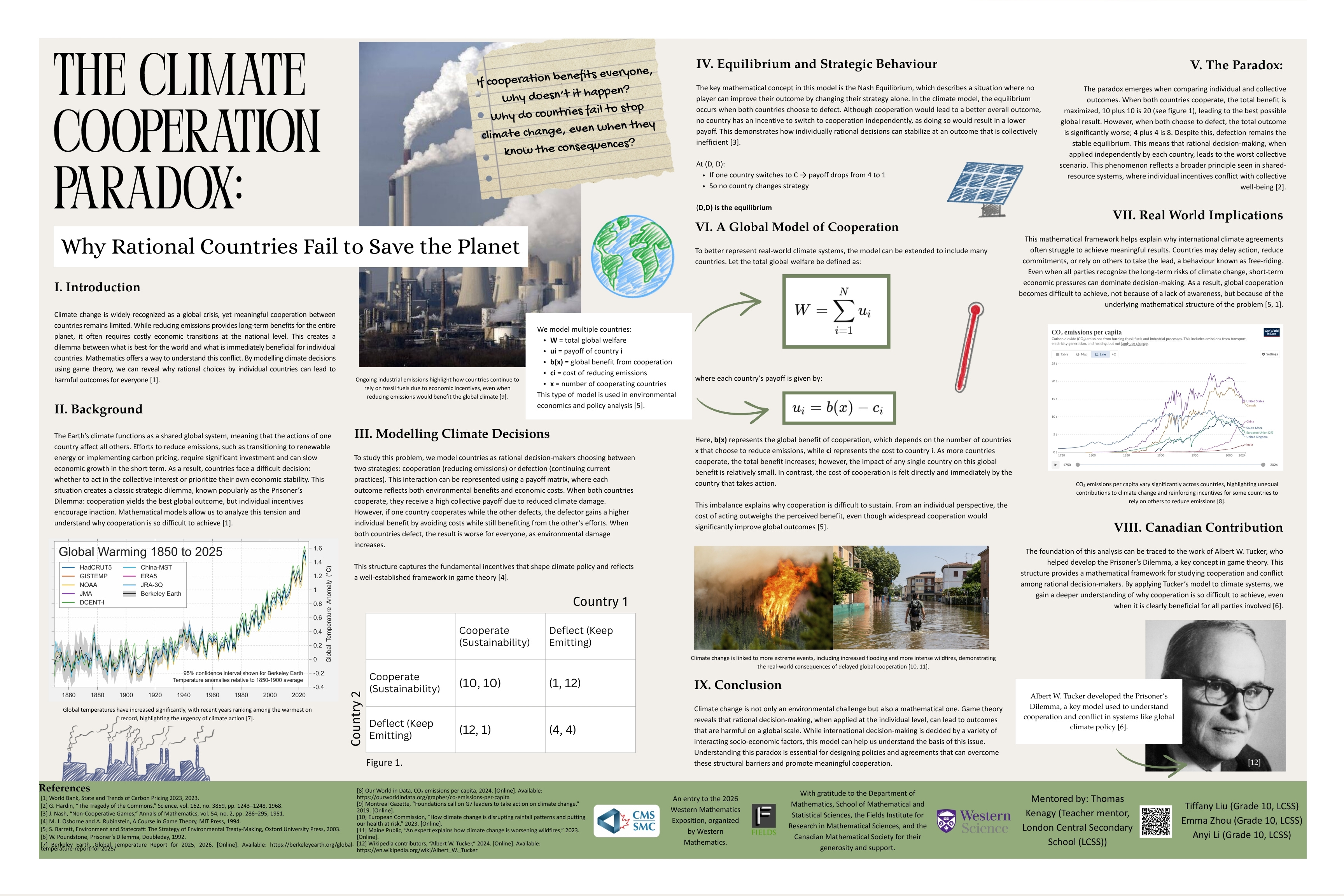
- Bronze Medal Winning Poster:
- Title: The Climate Cooperation Paradox: why rational countries fail to save the planet
- School Name: London Central Secondary School
- Mentor: Tom Kenagy
Winners of Video Projects
Winner of the Mathematical Artifact Projects
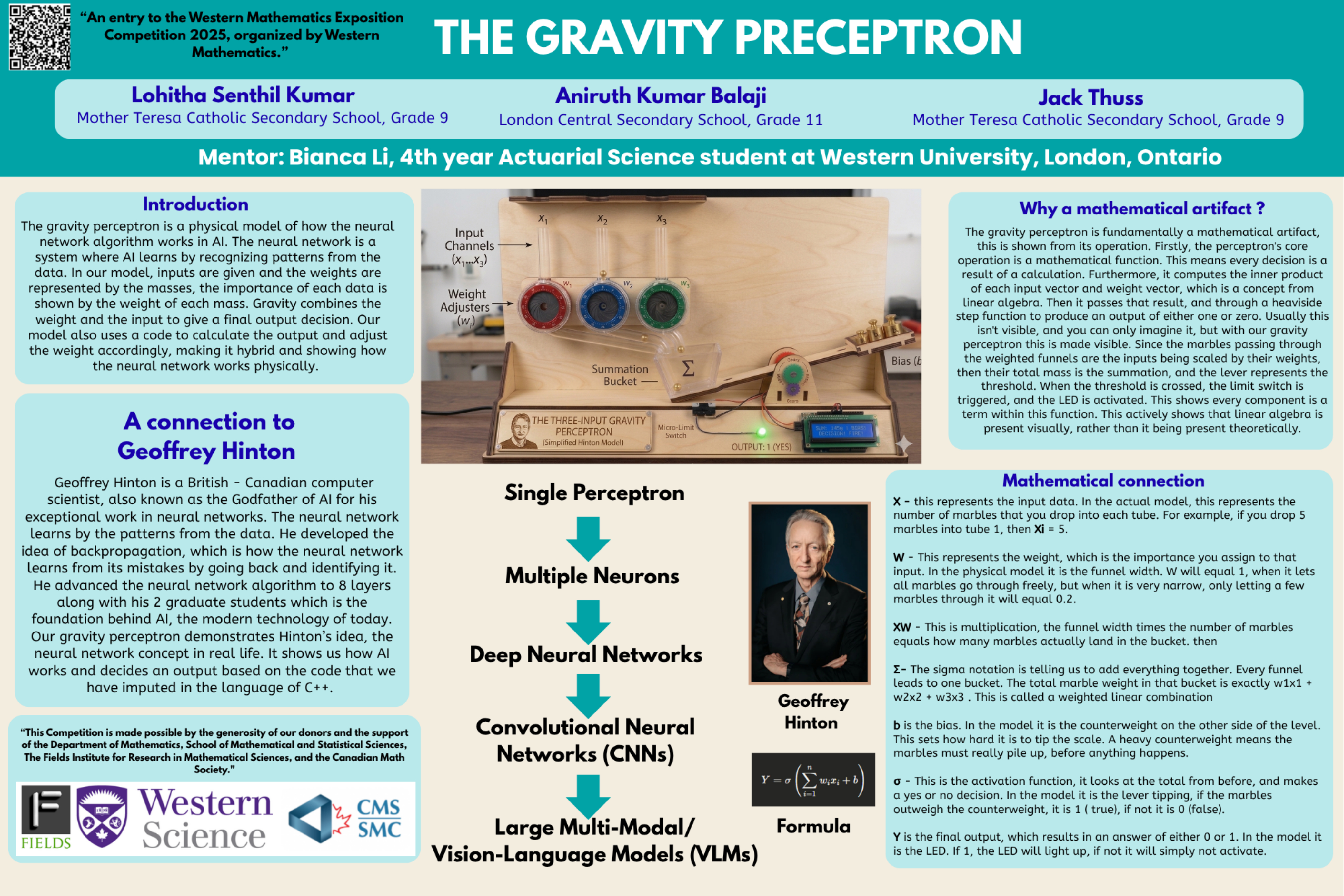
- Gold Medal Winning Mathematical Artifacts:
- Title: The Gravity Preceptron
- School name: Modether Teresa Catholic and London Central Secondary School
- Mentor: Bianca Li
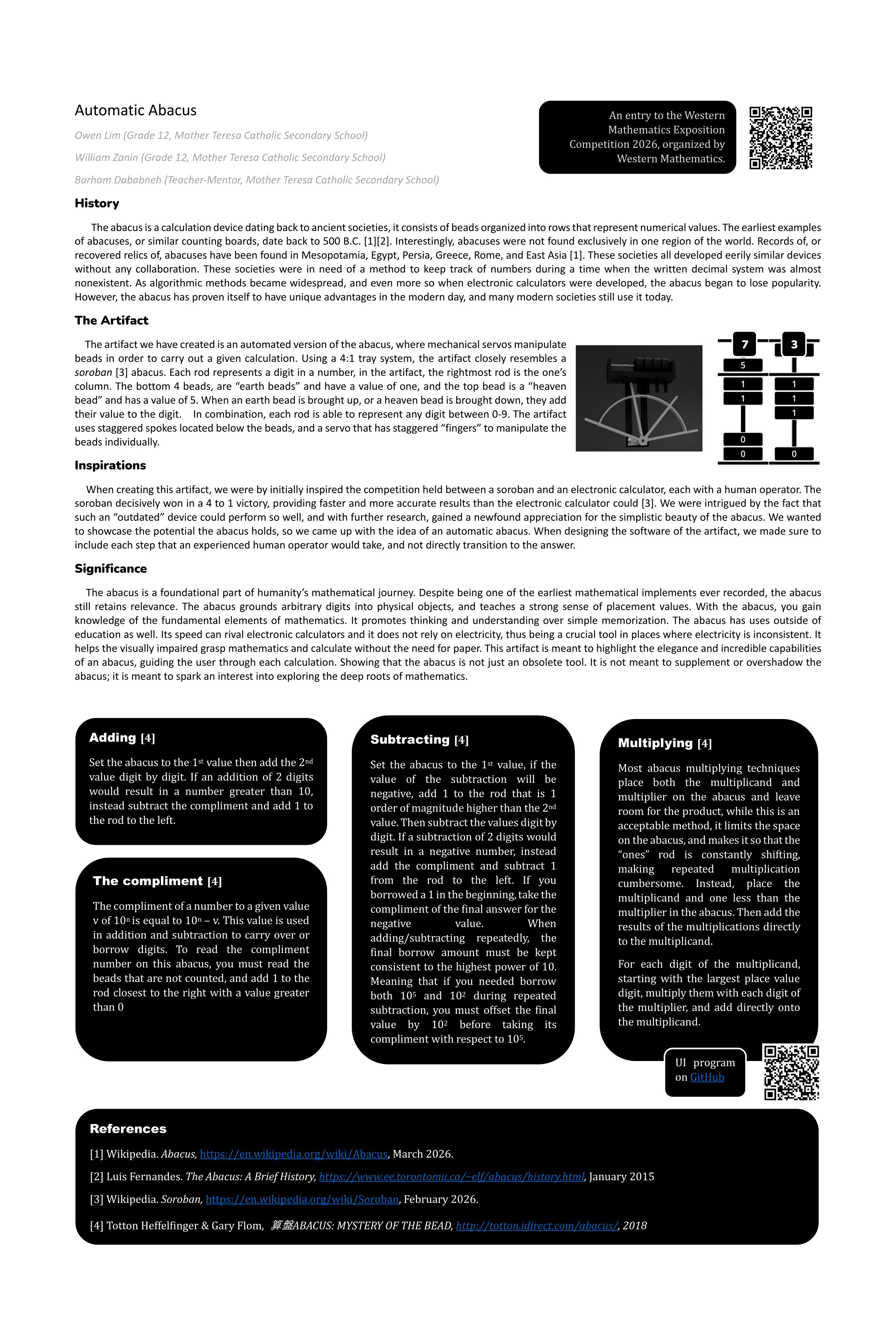
- Silver Medal Winning Mathematical Artifacts:
- Title: Automatic Abacus
- School name: Mother Teresa Catholic Secondary School
- Mentor: Barham Dababneh
Winner of The Special Category (Canadian Mathematicians)
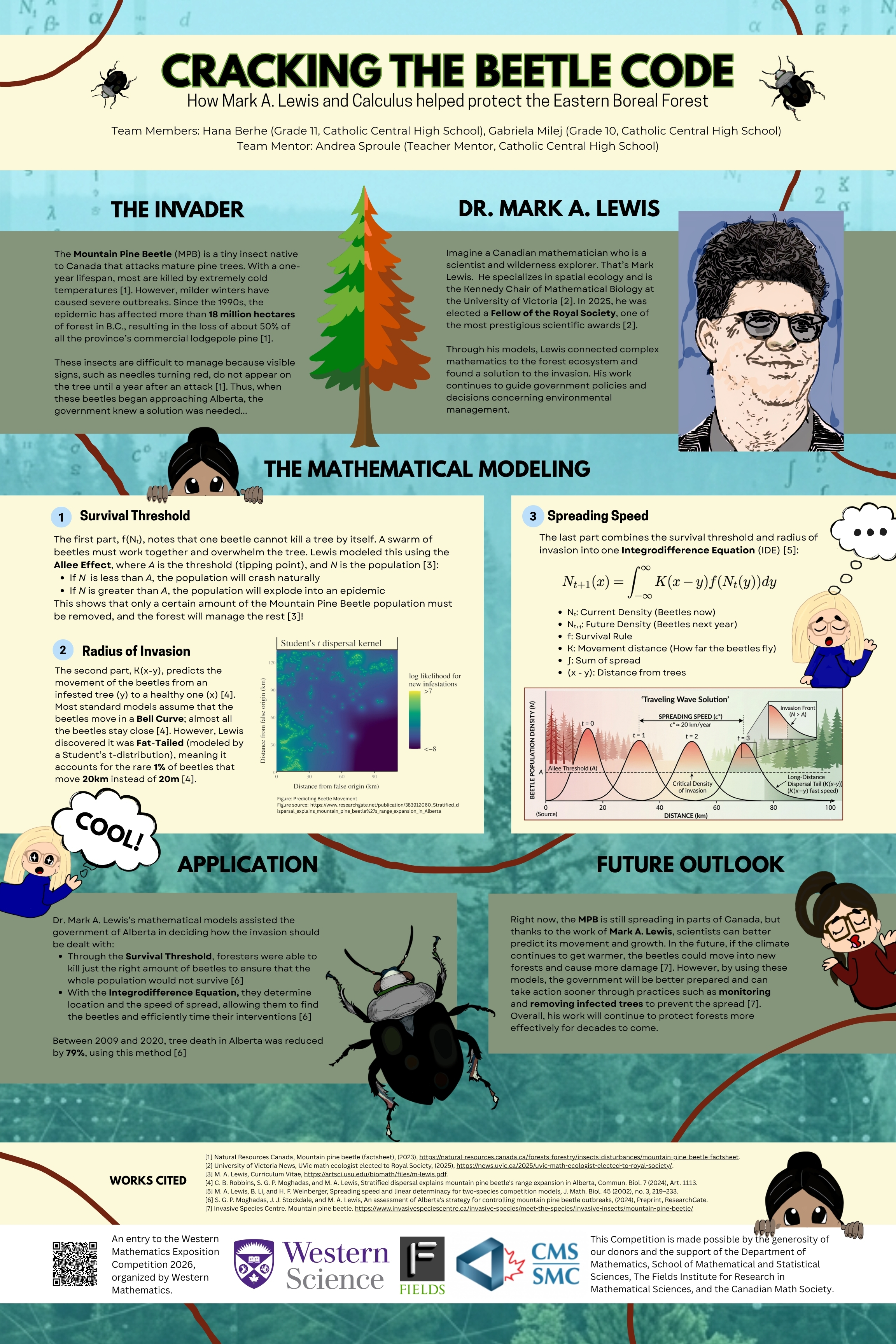
- Gold Medal Winning Project:
- Title: Cracking the Beetle Code: How Mark A. Lewis and Calculus Helped Protect the Eastern Boreal Forest
- School Name: Catholic Central Highschool
- Mentor: Andrea Sproule
Highlights of Past Competitions
Highlights of 2025-26 Competition
Highlights of 2024-25 Competition
Highlights of 2023-24 Competition
Highlights of 2022-23 Competition
Helpful Guide
The following video can help the participants to choose a proper topic for their project as well as guide them in the production of their project.
Organizing Committee of 2025-26:
- Coordinator: Dr. Asghar Ghorbanpour
- Coordinator Assistant: Anna Ng
- Marketing and Outreach Director: Bahar Zali Kah Kesh
- Operations Assistants: Harshith Alagandala
- Mathematics Element Advisor: Adrian Chitan